
What's New?
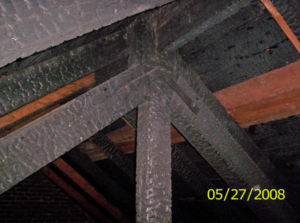
FIRE! 1854
5 years after the church is consecrated a potentially devastating fire could have destroyed it.
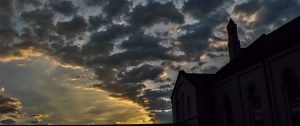
The Creation of the Third Church 1848-49
Several documents surrounding the creation of the third church.
At the conclusion of the construction, Rev. McGuire reported to the Annual Convention of the Episcopal Church in 1849:
There is still reason for acknowledging the good hand of our God, in the condition of this parish. We have shared the encouraging tokens of his grace and goodness. The undertaking reported to the last Convention has issued in the completion of a new Church, large and commodious, gratifying the taste in its architectural beauty and promising much advantage to us in prosperity and growth. The builders have been paid, leaving us without debt.
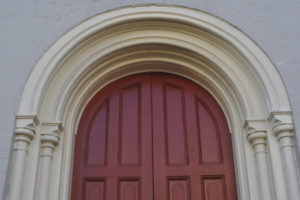
The 1849 Church Builders
More support for Robert Cary Long as St. George’s architect who practiced in Baltimore with examples of workers for St. George’s hired from Baltimore: During the 1981 renovation, Barbara Willis noted the following names written in chalk and covered on the right hand stair wall in the narthex, June, 1981. William Gilill (W H G) … Read more
Getting Started in St. George's History - 6 essential resources
Selections from several categories of our history.
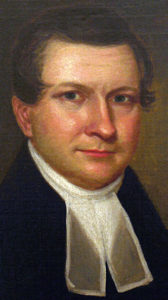
McGuire served all 3 churches over the course of 45 years. He is probably the most influential of all our rectors in all phases of ministry from preaching, teaching, and outreach. Trip Wiggins, our archivist, wrote this for a Sunday school class and has been teaching classes for years
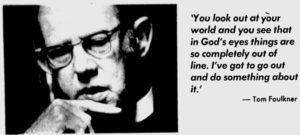
6. Tom Faulkner confronts the Vestry on race
Faulkner served St. George's for 30 years from 1946-1976. During these years racial policies were paramount, especially 1954, in the year of Brown vs. Board of Education, Faulkner was challenged by the Vestry on the role of Blacks in our service. He was able to move St. George's toward racial justice that other rectors would further