
What's New?
St. George’s Civil War – Part 7 – Return of the Church
Church services had been a part of the both armies on Sunday. But after Antietam in September, 1862 more and more revivals were requested by the soldiers themselves and not necessarily from chaplains. Many troops also came from a revivalist background. Officers supported revivals since there was the belief that Christian soldiers made better soldiers. … Read more
St. George’s Civil War – Part 6 – The Sacking of Fredericksburg
Beginning on the night of December 11, 1862 and continuing into the 12th, Fredericksburg suffered a level of destruction that had not been seen up to that time. After the event about $170,000 in donations came to the city to cover part of the losses or about $3.6 to $3.7 million in today’s dollars. Portions … Read more
St. George’s Civil War – Part 5 — The Church as a Fortress – December 11, 1862
December 11, 1862 would directly bring St. George’s into the hostilities of the Civil War. It was that day that the Church became a fortress against an advancing Union line coming from Stafford. Located prominently on a hill overlooking key streets to the north, the Church provided a wonderful location for soldiers to view approaching … Read more
Getting Started in St. George's History - 6 essential resources
Selections from several categories of our history.
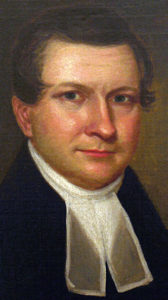
McGuire served all 3 churches over the course of 45 years. He is probably the most influential of all our rectors in all phases of ministry from preaching, teaching, and outreach. Trip Wiggins, our archivist, wrote this for a Sunday school class and has been teaching classes for years
6. Tom Faulkner confronts the Vestry on race
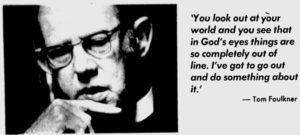
Faulkner served St. George's for 30 years from 1946-1976. During these years racial policies were paramount, especially 1954, in the year of Brown vs. Board of Education, Faulkner was challenged by the Vestry on the role of Blacks in our service. He was able to move St. George's toward racial justice that other rectors would further