
What's New?

Sparks Flew over Electing Women to the Vestry, 1966
The annual St. George’s congregational meeting began innocuously on January 24, 1966 with a cover dish meal followed by a meeting with “about a hundred persons present” an hour later. Votes were collected to elect the 1966 Vestry and while the counting was progressing, various reports were presented, typical during congregational meetings. Mrs. Carroll Quenzel, … Read more
St. George’s Civil War – Part 9 – Aftermath and Conclusion
The war ended in 1865 leaving Fredericksburg in disarray, affecting all life within. John Hennessy, National Park chief historian of Fredericksburg, writes “By war’s end, the community had been transformed, physically (more than 80 buildings destroyed – just under 10% of the city), economically (personal wealth dropped by more than 70%), and socially (thousands of … Read more
St. George’s Civil War – Part 8 – The Church as a Hospital
By May, 1864, Julia Wheelock, a Union Relief Worker, describes the medical scene, after the three of the four Civil War battles that affected Fredericksburg: “All the public buildings—the Court-House, churches, hotels, warehouses, factories, the paper mill, theatre, school-buildings, stores, stables, many private residences— and, in fact, everything that could give shelter was converted into … Read more
Getting Started in St. George's History - 6 essential resources
Selections from several categories of our history.
McGuire served all 3 churches over the course of 45 years. He is probably the most influential of all our rectors in all phases of ministry from preaching, teaching, and outreach. Trip Wiggins, our archivist, wrote this for a Sunday school class and has been teaching classes for years
6. Tom Faulkner confronts the Vestry on race
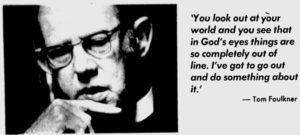
Faulkner served St. George's for 30 years from 1946-1976. During these years racial policies were paramount, especially 1954, in the year of Brown vs. Board of Education, Faulkner was challenged by the Vestry on the role of Blacks in our service. He was able to move St. George's toward racial justice that other rectors would further